Auckland Sports College
|
"Moving Forward Together"
|
|
Auckland Sports College - Sport
Our role in sport is to assist students to achieve their sporting aspirations whatever they are - giving a sport a go, social participation, all the way to a professional sporting career.
We place a great deal of importance on development, and utilise NZ Rugby's six pillars framework. Our player development programme for rugby looks something like:
| Physical | Nutrition/Recovery | Technical | Tactical | Mental | Character | |
| New to the Sport The emphasis is on building skills, confidence, and developing the ability to contribute to a team. Typically, these are year 9 students. |
Bodyweight exercises, coordination, movement patterns, speed & agility drills. Intro to injury prevention (e.g., RugbySmart warm-ups) | Basic nutrition (hydration, post-game meals), sleep hygiene, understanding rest. Avoid supplements | Core skills: safe tackle technique, pass both hands, ruck/maul entry, basic scrummaging. Ball familiarisation. | Understanding space, support play, simple attacking shapes, defensive alignment. Introduce team roles and communication. | Focus on growth mindset, positive self-talk, enjoying the game, dealing with mistakes. Fun goal setting. | Emphasise respect (ref, opponents, coaches), team rules, taking responsibility, being a good teammate |
| Competitive There is a much greater emphasis on developing the position-specific skills and sporting IQ |
Intro to gym-based strength training (supervised), sprint mechanics, mobility. Individualised fitness. Injury management education. | Nutrient timing, macros for energy, better understanding of hydration & game-day fuelling. Load management & quality sleep. | Skill under pressure, varied conditions. Skill linkage (e.g. pass off a tackle, clean out and reposition). Position-specific skills. | Phase play structures, reading defences, decision-making under fatigue, positional tactics. Small-sided scenario games. | Coping with setbacks, visualisation, routine-building (pre-game, pre-kick), working through nerves. Developing intrinsic motivation. | Leading by example, taking initiative, honest reflection, peer leadership. Connecting values to performance and training. |
| Premier/Elite Three questions
|
Advanced strength/power training, sprint periodisation, agility under fatigue. Injury risk management & body composition monitoring. | Performance nutrition, carb/protein balance, pre/post-match nutrition strategies. Sleep cycles, active recovery, self-monitoring. | Elite execution at pace, refined technique under fatigue & pressure, feedback-driven refinement. Position-specific specialisation. | Game plans, advanced systems (e.g., kicking strategy, defensive systems), live scenario-based sessions. Leadership in tactical calls. | Mental toughness, high-pressure coping strategies, journaling, performance review tools, mindfulness/visualisation routines. | Mentoring younger players, leading team standards, volunteering, community connection, self-awareness of off-field behaviours. |
We use a traffic-light report card to let players know where they are at. Using the 6 pillars as an example, there might be five measurables associated with each pillar. Each of the 30 cells in the table will coloured and allocated points : red = 0, orange = 1.5, green = 3, gold = 5 (and not awarded often), with the card marked for a total grade out of 100.
The most popular secondary school sports in NZ are netball, basketball, volleyball, rugby, and soccer. We will offer students the opportunity to play any and all of these and more, although our main sports at present are rugby, rugby league, and boxing.
|
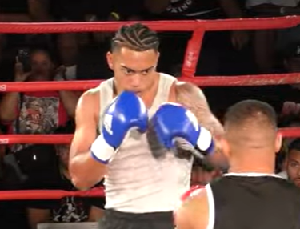
BoxingWe like boxing for the intense aerobic demands it makes on athletes. Our boys like boxing for the opportunities it offers to hit each other. As a school, and if we have the space, we would like to set up some boxing bags and a ring, and contract an external coach to deliver two coaching/sparring sessions a week. Those students who wish to box competitively will be supported to become amateurs and join a club. We do not support corporate boxing. The dangerous young light-heavyweight in the photo is our Lima Fatu. |
|
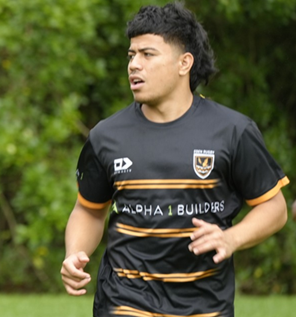
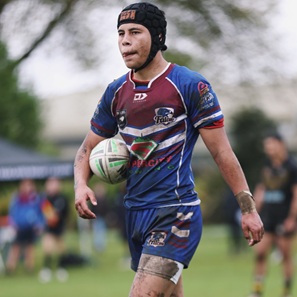
RugbyU15-U18 rugby in Auckland is controlled by secondary schools to suit the 1A schools. It is not fit for purpose for our students. This year we have 5 boys in the Eden U21 team and 4 in the Ponsonby U21 team. All nine belong in an U19 grade. Our intention is to talk to one or two rugby clubs with the intention of having them field U19 and U21 teams next year (with our Year 14 and 15 boys filling the U19 teams) and playing in the Counties competition. There's a bit of work for Siaosi to do here! The pathway for our older students is the Auckland U19 team.Our younger students will play in the schools' competition. We may play our 1st XV in the North Harbour competition. |
|
Rugby LeagueRugby league is our main sport at present. Our main internal competition is the McGregor Cup, an U19 or so livestreamed competition. Teams will be open to anyone. We expect the competition will attract boys not playing in the College Sport competition, boys thinking about leaving to chase the NRL dream in Australia, and boys playing rugby for their school who want to play league as well. |
We are committed to providing sporting opportunities for our students, and are active in the sports below as well as those above. Once we are a registered school we expect to field other teams. We will field teams whenever we have players, coaches, and support staff.
|
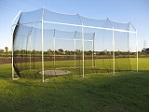
Athletics (discus and shotput) For youth involved in collision sports such as rugby and league, power is the goal of training in January. Power is the ability to deliver force at speed. Shotput and discus are both about power. We anticipate entering into the interschool athletics competition. |
|
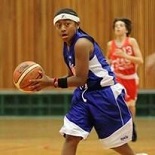
Basketball Basketball is a form of active recreation rather than a competitive sport for our students at present. |
|
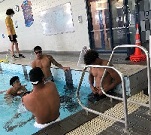
Swimming We do not currently have any competitive swimmers. We have a large number of students who say they can swim but keep their head above water or stand in the pool to take a breath. Swimming lessons and then swimming lengths are an important part of our PE curriculum. Towards the end of the year snorkelling, kayaking, and even SCUBA diving may be EOTC options. |

|
Tag Most of our students have played Tag over summer for a number of years. We anticipate entering the interschool Tag competition. |